Information
Landmark: Monastery of St. GeorgeCity: Pomorie
Country: Bulgaria
Continent: Europe
Monastery of St. George, Pomorie, Bulgaria, Europe
The Monastery of St. George in Pomorie is one of the most important spiritual and historical landmarks on the Bulgarian Black Sea coast. It holds great religious, cultural, and historical value, not only for Pomorie but for the country as a whole.
Here’s a detailed look at this remarkable place:
1. Historical Background
The Monastery of St. George (Манастир "Св. Георги") is believed to have been established during the Ottoman period, possibly in the 17th or 18th century.
It is the only active Orthodox monastery in the southeastern region of Bulgaria and one of the few functioning monasteries along the coast.
The exact foundation date is unclear due to a fire in the 19th century that destroyed many original records, but the site has long been regarded as a sacred and healing place.
2. Location and Layout
Located near the central part of Pomorie, not far from the beach and the main promenade.
The monastery is set within a walled courtyard filled with greenery, flower beds, a small orchard, and walking paths.
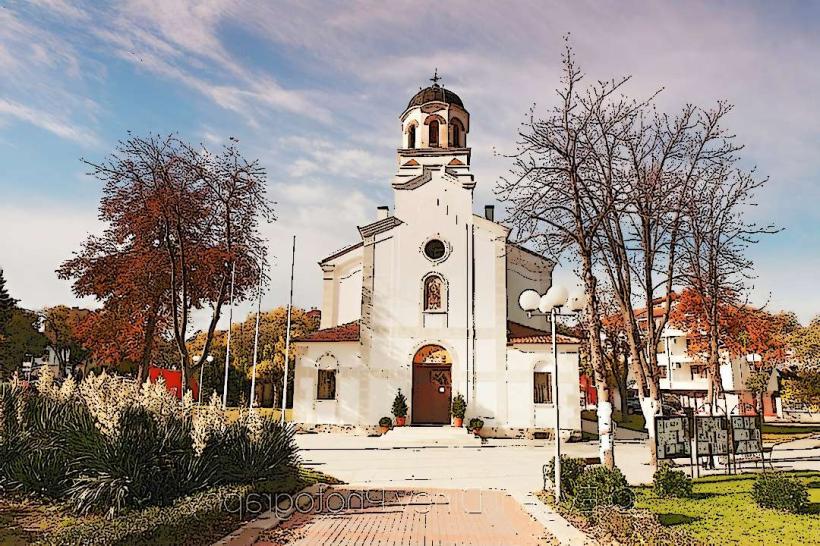
At the heart of the complex is the monastery church, dedicated to Saint George the Victorious, one of the most venerated saints in the Bulgarian Orthodox tradition.
3. Religious Significance
St. George is considered a protector of warriors, farmers, and the sick. His feast day (May 6) is a major religious celebration across Bulgaria.
The monastery is a popular pilgrimage site, especially during religious holidays like St. George’s Day, when thousands of people visit for blessings and liturgy.
Inside, the church features beautiful icons, wood-carved iconostases, and murals.
4. The Healing Spring (Ayazmo)
One of the most famous features of the monastery is its sacred spring, known as an ayazmo.
According to local legend, the spring was discovered by a Turkish bey who owned the land. After drinking the water, he was cured of a serious illness and converted to Christianity, donating the land for the construction of the monastery.
The water is believed to have healing properties, especially for eye and skin conditions.
Visitors can drink from the spring or take water home in bottles.
5. Cultural and Community Role
The monastery continues to play an active role in the spiritual life of Pomorie.
Hosts Orthodox liturgies, baptisms, and other religious services.
It is also involved in charity work, supporting local families and initiatives.
The monks maintain the grounds, care for visitors, and welcome pilgrims with traditional hospitality.
6. Architecture and Atmosphere
The current church building dates from the 19th century, reconstructed after fires and damage.
Traditional Orthodox design, with a single nave, a dome, and an elaborately carved iconostasis.
The grounds offer a quiet and contemplative space, with benches, flowers, and a small garden with statues of saints.
7. Visiting Information
Open daily to the public, with no entrance fee.
Modest dress is required out of respect for the religious setting.
Easily accessible from any part of Pomorie on foot or by car.
Visitors often light candles, pray at the icons, and collect spring water.
8. Importance
The Monastery of St. George is a living symbol of Bulgarian Orthodoxy, resilience, and faith through centuries of occupation and change.
It’s one of the few places where spiritual tradition, healing nature, and community life coexist in harmony.
It’s not only a place for believers, but also a serene and meaningful stop for tourists, history lovers, and those seeking peace and reflection.
Whether for prayer, history, or simply quiet contemplation, the Monastery of St. George is one of Pomorie’s most treasured landmarks.